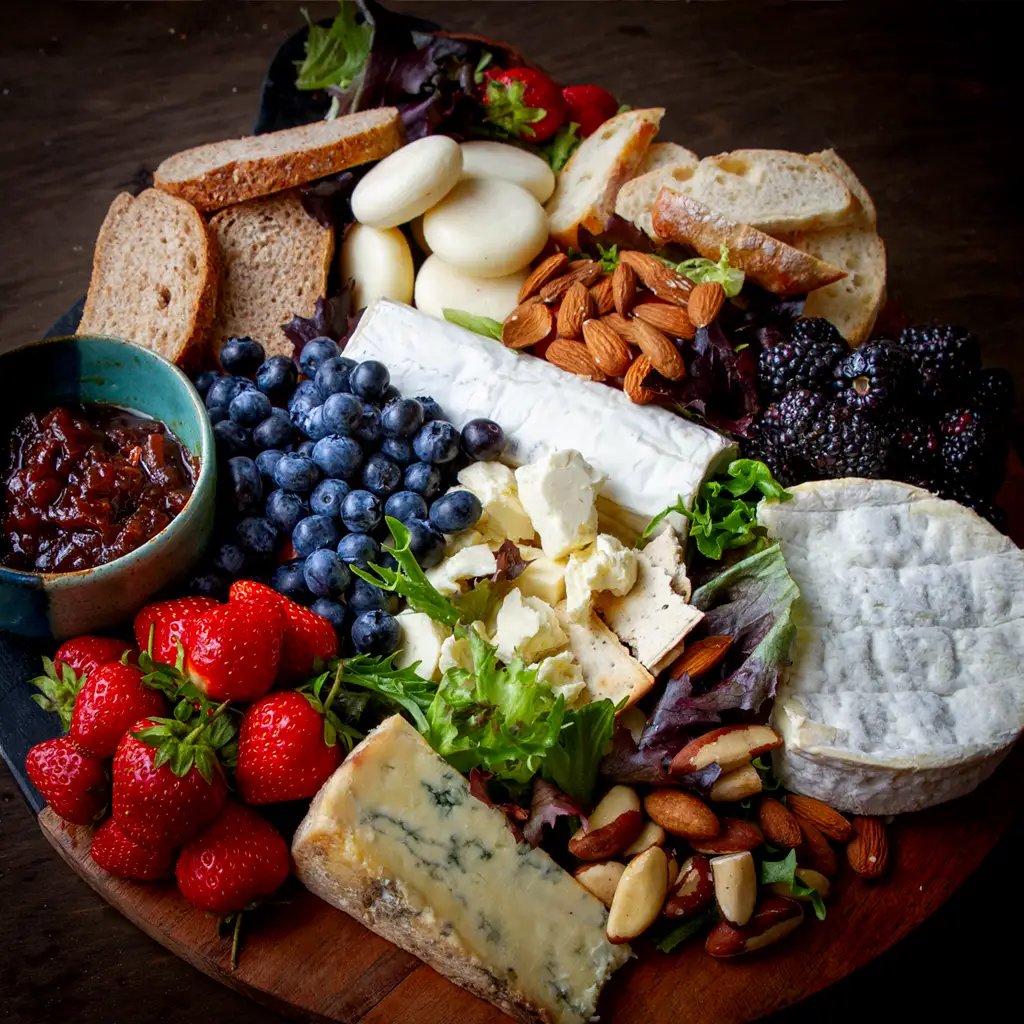
Do you like cheese?
Are you partial to cheese? You get the basics (a little like this board, which was good but very budget) and then you get the artisan cheeses. They’re NOT budget but, sometimes, oh… wow…
If you take a block of budget cheddar and pop it into your mouth. It tastes ok, even good. You get the salt, the sourness, a hint of umami tang, but it’s quite one dimensional. These cheese are better with a good chutney or some delicious home-grown tomato off the vine, best with some yummy bread or crackers.
But taste an exceptional piece of artisan cheese, and you experience several flavours and sensations almost at once, spread across different areas of your tongue and mouth. Here’s how those layers usually register:
Umami (savoury depth)
- Where you feel it: Mostly across the middle and back of the tongue.
- What it feels like: A deep, lingering savoury note—almost a “fullness” or richness rather than a sharp taste. It coats the mouth and leaves a lasting finish, often associated with aged or ripened cheeses (like Parmigiano-Reggiano or a mature Cheddar).
Creaminess (fat and texture)
- Where you feel it: Not just taste buds—this is a texture you sense along the sides of the tongue, roof of the mouth, and cheeks.
- What it feels like: A smooth, buttery coating that makes flavours linger. It softens sharper tastes (like tang or salt), balancing the experience.
Tang or acidity
- Where you feel it: Mostly on the sides of the tongue and sometimes towards the front.
- What it feels like: A sharp, bright lift—common in cheeses like goat’s cheese or young cheddars. It adds freshness and cuts through richness.
Saltiness
- Where you feel it: Primarily at the front and sides of the tongue.
- What it feels like: A spark that enhances all other flavours, intensifying the savoury and balancing sweetness or creaminess.
Sweet notes
- Where you feel it: On the tip of the tongue.
- What it feels like: Subtle, often in the background, more noticeable in creamier cheeses or those with caramelised, nutty profiles (like Gruyère).
Bitter undertones
- Where you feel it: Towards the back of the tongue.
- What it feels like: Very mild but can add complexity, especially in washed-rind or blue cheeses.
An exceptional cheese often combines several of these at once—umami depth, a creamy coating, a lift of tang or salt, maybe a sweet or nutty undertone—all layered so your whole mouth is engaged. The texture (crumbly, gooey, firm, or melting) also amplifies how those flavours unfold as you chew and warm the cheese.
How to taste artisan cheese like a pro
Exceptional cheese doesn’t just taste good—it feels like an experience. To really appreciate it:
- Look first. Notice the colour, the texture, any crystals (a sign of maturity), or a glossy rind.
- Smell it. Before you even taste, take in the aroma—it tells you so much about age, style, and intensity.
- Taste slowly.
- Let the cheese sit on your tongue. Notice the first hit (salt or tang often comes first).
- As it warms, feel the creaminess coat your mouth.
- The savoury depth—umami—usually blooms next, lingering at the back of the tongue.
- If it’s a well-aged or complex cheese, you might sense a little sweetness or even a faint bitterness as it finishes.
- Chew gently. Texture matters as much as flavour. Notice if it’s crumbly, gooey, firm, or melting—each texture changes how the flavours unfold.
- Pair thoughtfully. A sip of wine, a bite of fruit, or even just a breath of fresh air between tastes can make the next bite more vivid.
How do you know if a cheese is poor quality?
You can usually spot a poor-quality cheese by a mix of appearance, texture, smell, and flavour. Here’s how to tell—without sounding overly “food snob” about it:
1. Look at it
Odd colouring: Bright, artificial orange (unless naturally coloured with annatto) or dull grey spots (not intentional mould) can indicate poor processing or spoilage.
Uniform, plastic-like texture: Many low-quality cheeses (especially mass-produced ones) look unnaturally smooth or rubbery, with no signs of variation or ageing.
Excess moisture or sweating: A glossy, greasy surface can mean it’s been stored badly or stabilised with additives.
2. Smell it
- No smell at all: Quality cheese typically has some aroma, even if mild. If it smells like nothing, it’s likely heavily processed.
- Chemical or sour odour: If it smells of plastic, ammonia, or sour milk (beyond what’s natural for the style), it’s a warning sign.
3. Touch it
- Rubbery or waxy texture: Over-processed cheeses often feel more like plastic than dairy.
- Crumbly when it shouldn’t be (or vice versa): For example, Brie should feel soft and creamy, not dry or brittle.
4. Taste it
- Flat, one-note flavour: Good cheese has depth—layers of salt, creaminess, umami, tang, or nuttiness. Poor-quality cheese often tastes bland, overly salty, or just “milky” without character.
- Artificial aftertaste: If it leaves a chemical, plastic, or overly acidic taste, it’s probably full of stabilisers or poor-quality milk.
- Overly salty or sour: Cheap cheeses can lean on salt or acid to mask lack of flavour.
5. Check the label (if packaged)
- Long ingredient lists (stabilisers, flavourings, anti-caking agents) usually signal a cheese designed for shelf-life, not flavour.
- Real cheese typically lists only a few things: milk, cultures, rennet, and salt (plus spices or natural colour if used).
6. How it behaves
- Doesn’t melt properly (or at all): Over-processed cheeses often “sweat” or separate into oil and solids instead of melting smoothly.
- Goes bad too fast or lasts forever: Both extremes can be a red flag—either made poorly or pumped with preservatives.